Request a quote
Thanks for getting in touch
What Are SAP Calculations? A Clear Guide for Architects, Developers and Self Builders
If you’re planning a new build, extension, or residential conversion, understanding SAP calculations early can save time, cost, and compliance risk later in the project.
What Does SAP Stand For?
SAP stands for Standard Assessment Procedure.
- Carbon dioxide emissions
- Predicted energy use and running costs
- Dwelling EPC ratings (A–G)
The current version used for Building Regulations compliance in England is SAP 10.2.
Why Are SAP Calculations Required?
SAP calculations are required to prove compliance with Part L of the Building Regulations for residential buildings.
They are mandatory for:
- New dwellings
- Residential conversions
- Change of use to a dwelling
- Extensions (where Part L applies) ie Highly glazed extensions
SAP calculations are submitted to Building Control at both design and completion stages.
When in a Project Are SAP Calculations Carried Out?
SAP is not a single calculation it is a two-stage process. 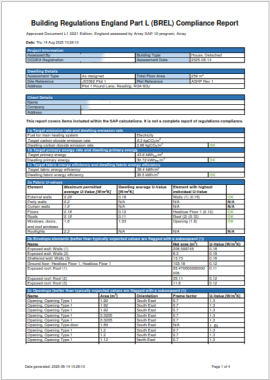
- Design Stage SAP (Pre-Construction)
Prepared during planning or technical design, this stage:
- Assesses whether the proposed design meets Part L targets
- Informs fabric specifications (U-values, glazing, airtightness requirements)
- Influences heating, hot water, ventilation and renewables
- Allows design changes before construction starts
Early SAP input is critical to avoid costly redesigns later.
- As-Built SAP (Post-Construction)
Completed once the dwelling is finished, this stage:
- Uses confirmed construction details and test results
- Incorporates airtightness test result
- Confirms final systems installed an incorporates as built Photographic evidence
- Produces the As built EPC
The output from the As built SAPs is the BREL (Building Regulations England Part L) that your Building Control officer will require.
What Information Is Used in a SAP Calculation?
A SAP assessment considers the whole dwelling as a system, including:
Building Fabric
- Walls, roofs, floors insulation build-ups
- Thermal bridging (ψ-values)
- Window and door U-values and g-values
Heating & Hot Water
- Boiler, heat pump or electric heating type
- Efficiency and controls
- Hot water cylinder and distribution losses
Ventilation
- Natural, MEV, MVHR or other systems
Airtightness
- Design air permeability target
- Final blower-door test result
Renewable Technologies
- Solar PV
- Solar thermal
- Battery storage (where applicable)
All inputs directly affect compliance margins, Part l compliance and EPC outcomes.
What Are the Key SAP Targets Under Part L?
SAP calculations assess compliance against several regulatory metrics, including:
- TER – Target Emission Rate
- TFEE – Target Fabric Energy Efficiency
- TPER – Target Primary Energy Rate
To pass, the dwelling must meet or better the target values set by Building Regulations
- DER – Dwelling Emission Rate
- DFEE – Dwelling Fabric Energy Efficiency
- DPER – Dwelling Primary Energy Rate
How Do SAP Calculations affect EPC Ratings?
SAP calculations generate the data used to produce a domestic EPC.
Design decisions made at SAP stage will directly influence:
- EPC rating (A–G)
- Future rental or sale viability
- Long-term energy bills
- Compliance with future MEES requirements
A poorly optimised SAP design can result in avoidable EPC shortfalls.
Common SAP Mistakes We See on Residential Projects
Based on real-world project experience, common issues include:
- Leaving SAP too late in the design process causing final compliance issues or failure ti meet the dwelling EPC rating required
- Over-reliance on renewables instead of fabric efficiency
- Unrealistic airtightness assumptions
- Incompatibility between architectural details and SAP inputs
- SAP not aligned with Part O overheating or Part F ventilation strategy
Early coordination avoids last-minute compliance stress.
How Energy Report Supports SAP Compliance
At Energy Report, we aim to provide a solution from the outset and support during the build to ensure that compliance is a given once the dwelling is built.
Our approach focuses on:
- Early-stage SAP advice to support planning and design
- Clear, practical recommendations aligned with buildability
- Coordination with Part L, Part O and Part F requirements
- Supporting Building Control queries through to sign-off
- Delivering SAP, EPC and compliance documentation efficiently
This ensures energy compliance is achieved without disrupting construction programmes.
Frequently Asked Questions About SAP Calculations
Is SAP required for extensions?
Yes, where the extension creates a new dwelling or triggers Part L requirements such as highly glazed extensions.
Can SAP calculations change during a build?
Yes. Any change to fabric, glazing, heating or ventilation may require SAP updates.
How long do SAP calculations take?
Typically 2–5 working days, depending on design complexity and information quality.
Who can produce SAP calculations?
SAP must be completed by a qualified On-Construction Domestic Energy Assessor (OCDEA), we employ accredited OCDEAs
Final Thoughts: Why SAP Calculations Matter
SAP calculations sit at the heart of residential energy compliance in the UK.
Handled correctly, they:
- Reduce compliance risk
- Improve EPC outcomes
- Support lower energy bills
- Enable smoother Building Control approval
Handled late or incorrectly, they can cause costly redesigns and delays.
Need SAP Calculations for Your Project?
Whether you’re at planning stage or approaching completion, Energy Report can support your project with clear, compliant SAP assessments tailored to UK Building Regulations.
Get in touch to discuss your SAP requirements
Need Help with Your Project?
We always welcome new projects so if you need a dedicated consultant, we are here to help. Contact us today to build a better future.
Get in touch