Request a quote
Thanks for getting in touch
The Part L vs Part O Collision – Why Overheating Compliance is Ruining Your SAP Calculations
How Solving Overheating (Part O) is Causing Your New Build to Fail Part L
In June 2022, the Building Regulations introduced Approved Document O (Overheating) to address the growing risk of high internal temperatures in new homes. While the intention is sound, the reality on the ground has created a significant compliance headache for developers and architects.
We are seeing a growing trend at Energy Report: Architects are successfully designing out overheating risks to pass Part O, only to find that their mitigation strategies have completely destroyed their Part L (Conservation of Fuel and Power) SAP calculations. The two regulations are fundamentally in conflict and balancing them requires a highly strategic approach.
We explore the complex interaction between Part L and Part O, the differences between simplified and dynamic overheating assessments, and the hidden pitfalls of window restrictions, G-values, MVHR limitations, and the air conditioning backstop
Simplified vs. Dynamic Overheating Assessments
Part O provides two routes to compliance: the Simplified Method and Dynamic Thermal Modelling (CIBSE TM59).
The Simplified Method is prescriptive and rigid. It dictates strict limits on the maximum allowable glazing area based on the floor area, orientation, and whether the dwelling has cross-ventilation. It also mandates a minimum free opening area for windows to provide purge ventilation. While easy to understand, the Simplified Method is extremely restrictive. It does not allow designers to claim credit for external shading (like brise soleil or overhangs) or mechanical ventilation.
When a design fails the Simplified Method, which is common for modern homes with large expanses of glazing or single-aspect flats, developers must turn to Dynamic Thermal Modelling. At Energy Report we do our best to avoid this step by making an assessment of the likelihood that a design will meet the simplified method.
The Dynamic method uses sophisticated software to simulate the building’s thermal performance hour-by-hour over a typical summer year. Dynamic modelling allows for much greater design flexibility. It can account for external shading, specific window opening profiles, and advanced solar control glazing. However, the mitigation strategies required to pass the dynamic model often trigger a domino effect that impacts Part L.
The G-Value Trap: When Solar Control Ruins SAP
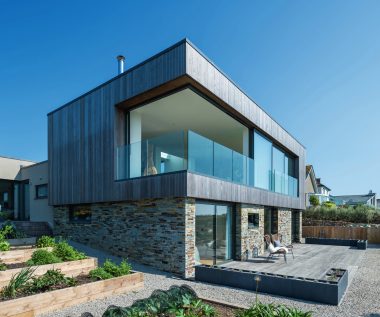
One of the most common ways to pass a dynamic Part O assessment without shrinking the windows is to specify solar control glazing with a low G-value.
The G-value (or solar factor) measures how much solar heat is transmitted through the glass. Standard double glazing might have a G-value of 0.63, allowing 63% of solar heat to enter. To pass Part O, dynamic modellers often specify a low G-value of 0.40 or even 0.30 to block the summer sun.
Here is where the conflict with Part L begins. While blocking solar gain is excellent for preventing summer overheating, it is disastrous for winter heating. SAP calculations rely heavily on “free” solar heat gains during the winter months to reduce the space heating demand and lower the Dwelling Emission Rate (DER) and Dwelling Fabric Energy Efficiency (DFEE).
When you install low G-value glass to pass Part O, you strip away that free winter heat. The SAP calculation compensates by increasing the demand on the primary heating system. If the building’s fabric is not highly insulated to begin with, this sudden loss of solar gain will cause the design to fail Part L.
The Low Cill Height and Window Restrictor Conflict
Part O relies heavily on opening windows to purge excess heat. The regulations mandate specific free opening areas to achieve compliance. However, this requirement frequently clashes with safety regulations, particularly Part K (Protection from Falling).
Approved Document O stipulates that windows used for overheating mitigation must have a minimum guarding height. For upper-floor windows, the cill height must be at least 1,100mm above the finished floor level (or 1,000mm if it is an escape window)
If an architect designs a window with a low cill height (e.g., 600mm) to maximize views and natural light, they cannot simply open the window fully to pass Part O, as this creates a severe fall risk. The standard safety solution is to install a fixed window restrictor, limiting the opening to a maximum of 100mm.
However, a window restricted to 100mm provides a fraction of the purge ventilation compared to a fully open window. When this restricted equivalent area is entered into the Part O calculation, the building almost always fails the overheating assessment. Developers are then forced to either raise the cill heights, install internal safety guarding (which can be unsightly), or find alternative ways to cool the building.
Easily Accessible Windows: The Part O Problem That Catches Everyone Out
One of the most frequently misunderstood and overlooked provisions in Approved Document O is the concept of “easily accessible windows” and it is causing significant compliance failures, particularly on bungalows and properties with balconies.
What Does “Easily Accessible” Mean in Approved Document O?
Approved Document O defines an easily accessible window as any window or doorway where any part of the opening is within 2 metres vertically of an accessible level surface. An accessible level surface includes:
- The ground meaning all ground floor windows in any property type are, by definition, easily accessible
- A flat roof meaning any window within 2m above a flat roof, such as a dormer window above a single-storey rear extension, is easily accessible
- A pitched roof with a pitch of less than 30 degrees meaning windows above shallow-pitched roofs, such as those above a mono-pitched porch or a low-pitched bay roof, are also easily accessible
- A balcony, terrace, or other accessible platform meaning any window that opens onto or is less than 2m above a balcony is easily accessible, regardless of how high it sits above the ground
The practical consequence of this definition is significant. Any window classified as easily accessible cannot be modelled as open at night when the room is unoccupied, or when the dwelling as a whole is unoccupied. This is a direct security requirement an easily accessible open window presents an obvious risk of unauthorised entry.
Why Is This a Problem for Bungalows?
Bungalows represent one of the most challenging building types under Part O, and the easily accessible window definition is the primary reason why.
In a standard two-storey house, the upper-floor bedroom windows are above 2m from the ground and therefore not easily accessible. Those windows can be modelled as open at night, providing the purge ventilation that is critical to passing the overheating assessment. In a bungalow, every single window is at ground floor level therefore every window in every room is, by definition, easily accessible. Not a single window can be modelled as open at night for security reasons.
This creates an almost impossible overheating scenario. The bedrooms which are the rooms most scrutinised in the TM59 dynamic assessment, where the internal temperature must not exceed 26°C for more than 1% of annual occupied hours cannot benefit from night-time purge ventilation through any window. The designer is left with a very limited toolkit: external shading, reduced glazing areas, high thermal mass, or mechanical cooling. Each of these options carries its own cost and compliance implications.
What Are the Solutions for Easily Accessible Windows?
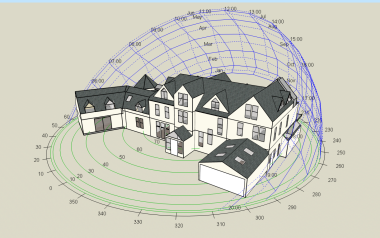
When easily accessible windows prevent natural night-time ventilation, the options available to the designer are:
- Secure, controllable louvres or trickle ventilators these can be modelled as open at night because they do not present a security risk, but their equivalent area is typically small and rarely sufficient on its own
- Purge ventilation fans — a mechanical extract fan in the affected room that can be operated by the occupant, though these are noisy and do not replicate the comfort of fresh air
- Mechanical Ventilation with Heat Recovery (MVHR) see the important limitations discussed in the following section
- Mechanical cooling (air conditioning) the backstop option, with significant Part L consequences discussed below
The Myth of MVHR as an Overheating Cure-All
When natural ventilation fails due to noise constraints, pollution, or restricted windows, developers often assume that Mechanical Ventilation with Heat Recovery (MVHR) will solve the overheating problem. This is a dangerous misconception.
While MVHR systems are excellent for providing background fresh air and retaining heat in the winter, they are generally ineffective at providing the high-volume purge ventilation required to cool a severely overheating building in the summer.
To mitigate overheating, a building typically requires 4 to 8 air changes per hour (ACH). A standard domestic MVHR system, even when running on “boost” mode with the summer bypass engaged, typically only delivers 0.5 to 1.5 ACH. Trying to force an MVHR system to deliver 4 ACH requires massively oversized ductwork, enormous fan units, and creates unacceptable noise levels (failing acoustic regulations). MVHR is a ventilation strategy, not an active cooling system.
The Air Conditioning Backstop
If all passive measures – glazing reductions, shading, and natural ventilation fail to mitigate the overheating risk, Part O permits the use of mechanical cooling (air conditioning) as a last resort backstop.
Many developers assume that if they simply install a small split-system air conditioner, they can bypass the complex Part O design challenges. This solution is just a backstop an all else fails solutions for Part O and will have to be agreed with your building control officer.
If modelling under Dynamic modelling TM59, there is no mechanism to include Air Conditioning in the analysis and therefore the Part O report will indicate a failure, with advice to discuss Air conditioning as the final option to mitigate Overheating.
Navigating the Collision with Energy Report
The days of treating Part L and Part O as isolated assessments are over. A change made to satisfy the overheating regulations will inevitably ripple through the energy model, and vice versa.
At Energy Report, we do not operate in silos. We conduct integrated Part L SAP calculations and Part O Overheating assessments simultaneously. By running the dynamic thermal models alongside the SAP calculations, we can find the precise “sweet spot” balancing the G-values, shading strategies, and ventilation rates so that your new build passes both regulations without requiring expensive redesigns or costly mechanical cooling.
Do not let the Part O collision derail your project. Contact Energy Report today for an integrated compliance strategy.
Need Help with Your Project?
We always welcome new projects so if you need a dedicated consultant, we are here to help. Contact us today to build a better future.
Get in touch