Request a quote
Thanks for getting in touch
CIBSE TM59 (2026) Update: What Developers Need to Know About the New Overheating Methodology
Whether you are developing a new apartment block in London or undertaking a development of residential units in Southampton, managing overheating risk has become a critical compliance hurdle. The UK's changing climate and the drive for highly insulated, airtight homes have made summer thermal comfort a primary design consideration.
A Stricter, Three-Stage Modelling Strategy
The most significant structural change in the 2026 update is the introduction of a prescriptive three-stage modelling strategy. This approach enforces the “passive first” cooling hierarchy, ensuring that mechanical systems are only specified when absolutely necessary.
The three stages are defined as follows:
| Stage | Focus | Key Assumptions | Requirement |
| Stage 1 | Passive Design Baseline | No site-specific noise, security, or air quality constraints. Only passive measures and background mechanical ventilation (e.g., MVHR with summer bypass) are permitted. | All spaces must pass the relevant overheating criteria. |
| Stage 2 | Real-World Constraints | Site-specific constraints (noise, security, pollution) are applied. Enhanced passive measures and higher-rate mechanical ventilation (without cooling) can be introduced. | Required only if constraints apply. Spaces must pass criteria under these conditions. |
| Stage 3 | Mechanical Cooling | Applied only if Stage 2 fails. Mechanical cooling is introduced but must be controlled to operate only when natural/mechanical ventilation cannot meet comfort targets. | Required only if Stage 2 fails. Spaces must pass Criteria b and c. |
For developers, this means that you can no longer bypass passive design by immediately specifying mechanical cooling in noisy or polluted urban environments. The building must first prove it can perform passively in an unconstrained scenario before site-specific limitations are applied
Revised Night-Time Comfort Criteria for Bedrooms
A major update that will be welcomed by many in the industry is the easing of the night-time bedroom comfort limit (Criterion b). Based on recent academic research into sleep comfort, the methodology has moved away from hourly temperature thresholds during the night.
Criterion b now focuses on the mean operative temperature during the hours of sleep (defined as 11:00 PM to 8:00 AM). The number of nights where this mean temperature exceeds the threshold (26 °C for Category I vulnerable dwellings, and 27 °C for standard Category II dwellings) must not be more than four nights between May and September [1]. This shift provides a more realistic assessment of sleep disruption and may make it easier for well-designed, naturally ventilated bedrooms to pass compliance without resorting to active cooling.
Clearer Rules for Communal Areas and Home Offices
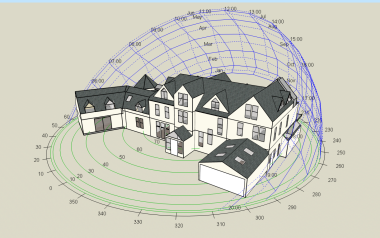
The 2026 update brings much-needed clarity to spaces that were previously ambiguous or difficult to model consistently.
Communal circulation areas, such as corridors and stairwells, now have a dedicated overheating metric (Criterion d). The operative temperature in these spaces must not exceed 28 °C for more than 3% of occupied hours between May and September [1]. This is particularly critical for apartment blocks with community heating systems, where heat losses from distribution pipework are a major source of overheating. The methodology mandates that heat gains from pipework must be applied uniformly and continuously throughout the year, forcing developers to prioritise effective pipe insulation and lower flow temperatures [1].
Furthermore, acknowledging the permanent shift towards remote working, TM59: 2026 introduces specific heat gain profiles and criteria for home offices. Rooms smaller than a standard bedroom but capable of accommodating a desk must now be modelled with specific occupancy and equipment gains from 9:00 AM to 10:00 PM, ensuring these spaces remain comfortable during long working days.
The Role of Ceiling Fans in Compliance
In a move to encourage low-energy cooling solutions, the updated methodology formally recognises the cooling effect of ceiling fans [1]. When manually controlled ceiling fans are installed as part of the base build, the operative temperature threshold for daytime spaces (Criterion a and Criterion c) can be increased by up to 1.2 °C for naturally ventilated spaces and up to 2.1 °C for mechanically ventilated spaces, provided the fans generate sufficient air speeds.
However, it is important to note that this temperature uplift is not permitted for bedrooms at night (Criterion b) or communal areas (Criterion d) due to limited evidence on sleep improvement and practical control issues.
What This Means for Your Next Project
The CIBSE TM59: 2026 update reinforces the necessity of early-stage dynamic thermal modelling. By enforcing a strict “passive first” hierarchy and requiring explicit modelling of real-world constraints like noise and security, the methodology ensures that new homes are resilient to a warming climate without defaulting to energy-intensive air conditioning.
For developers and architects, engaging with an experienced compliance partner early in the design process is more critical than ever. At Energy Report Limited, our team has the technical depth and real-world building knowledge to navigate these new requirements, ensuring your projects achieve compliance efficiently while delivering comfortable, sustainable homes.
Need Help with Your Project?
We always welcome new projects so if you need a dedicated consultant, we are here to help. Contact us today to build a better future.
Get in touch