Request a quote
Thanks for getting in touch
The Draft London Plan 2026: Navigating the 2030 Net-Zero Mandate
The London skyline is a perpetual tapestry of motion, where the silhouettes of cranes and the glint of glass facades tell the story of a city constantly redefining itself. With the release of the Draft London Plan 2026, the Greater London Authority (GLA) has set a course that is both ambitious and uncompromising. At its heart lies a transformative mandate: all new developments must achieve net-zero carbon status on-site by 2030.
The Challenge: Balancing Growth with a Net-Zero Reality
The central conflict of the 2026 Draft Plan is one of scale and speed. London faces a staggering housing target: aiming to deliver over 550,000 new homes by 2037: yet this growth must now happen within a “Net-Zero 2030” framework. This creates a friction between the urgent need for densification and the strict carbon limits imposed on new construction.
The challenge is multi-faceted:
- The On-Site Mandate: Unlike previous iterations where carbon shortfalls could be easily mitigated through offset payments, the 2026 Draft places a heavy emphasis on achieving net-zero on-site. The goal is to reduce the reliance on borough-level offset funds, forcing a higher level of innovation in Energy Statements London.
- Whole Life Carbon (WLC): Perhaps the most significant hurdle is the “Retention vs. Demolition” framework. The GLA now requires a robust justification for any demolition. If a building is to be knocked down, the developer must prove that the new structure’s operational savings will outweigh the massive embodied carbon “debt” of the demolition and reconstruction within a very short timeframe.
- The Performance Gap: For years, the industry has wrestled with the discrepancy between “as-designed” and “as-built” performance. The new plan seeks to close this gap permanently through the strengthening of the “Be Seen” policy, requiring five years of rigorous post-occupancy monitoring.
Our Approach: Precision Modelling and Strategic Planning

At Energy Report, our role is to act as the technical bridge between architectural vision and regulatory reality. Navigating the Draft London Plan 2026 requires a more integrated approach than ever before. We don’t just provide a final report; we embed ourselves in the design process from the earliest feasibility stages.
Our approach to meeting these new standards involves a specific sequence of technical interventions:
- Integrated SAP and SBEM Assessments: We utilize advanced modelling (SAP 10.2 and the latest SBEM versions) to push the boundaries of the “Be Lean” stage. By refining U-values, enhancing thermal bridging analysis, and specifying superior air tightness testing targets, we aim to exceed the mandatory 35% on-site CO2 reduction beyond Part L 2021 before renewables are even considered.
- Whole Life Carbon Strategy: We help clients navigate the “Retention vs. Demolition” dilemma by providing comparative carbon modelling. By analyzing the embodied carbon of materials alongside operational energy, we help developers make the case for deep retrofits or, where necessary, justify high-performance new builds.
- The Heating Hierarchy & Heat Network Zones: The 2026 Plan accelerates the phase-out of gas. We work to align developments with London’s evolving Heat Network Zones, prioritizing connection to low-carbon district heating or specifying high-efficiency air-source heat pump (ASHP) systems that integrate seamlessly with the building’s demand profile.
- Implementing “Be Seen” Monitoring: We design the energy monitoring strategy at the planning stage. This ensures that the metering infrastructure is in place to provide the data required for the five-year post-occupancy reporting mandate.At Energy Report, our role is to act as the technical bridge between architectural vision and regulatory reality. Navigating the Draft London Plan 2026 requires a more integrated approach than ever before. We don’t just provide a final report; we embed ourselves in the design process from the earliest feasibility stages.
Our approach to meeting these new standards involves a specific sequence of technical interventions:
The Outcome: Compliance, Viability, and Performance
When these policies are navigated correctly, the result is a development that stands as a model for 21st-century urbanism. By aligning with the 2026 Draft early, our clients are achieving outcomes that were once thought to be technically out of reach.
The outcomes we are seeing include:
- Future-Proofed Assets: Buildings that already meet the 2030 net-zero targets, protecting developers from the risk of “stranded assets” as legislation tightens further.
- Reduced Operational Costs: Through the “Be Seen” monitoring, we are identifying and fixing inefficiencies early, leading to significantly lower energy bills for occupants and better MEES compliance for commercial landlords.
- Streamlined Planning Approvals: Our Part L & SBEM assessments and comprehensive energy statements provide the GLA and local boroughs with the technical confidence they need to approve major schemes.
Why It Matters: Beyond the Building Regulations
The Draft London Plan 2026 is more than a list of technical requirements; it is a declaration of intent. As the UK moves toward the Future Homes Standard and the UK Net Zero Carbon Building Standard, London is once again leading the way.
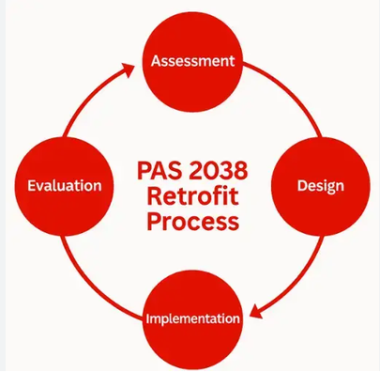
The move toward a “Retrofit First” mindset: as seen in the retention vs. demolition framework: recognizes that the greenest building is often the one that already exists. By prioritizing deep retrofits and high-performance new builds that are monitored for actual performance, London is tackling the climate emergency at its source.
This policy shift matters because it changes the definition of quality in the construction industry. A successful project is no longer one that simply passes a design-stage model; it is one that performs in the real world, year after year. For developers, this means the relationship with their energy consultant must move from a transactional “compliance check” to a long-term strategic partnership.
Summary
The Draft London Plan 2026 represents a bold, necessary step toward a net-zero capital. While the 2030 mandate and the focus on retention present significant challenges, they also offer a clear roadmap for those willing to embrace technical excellence.
At Energy Report, we are here to help you navigate this transition. Whether you are managing a major commercial retrofit or a large-scale residential development, our team provides the expert modelling and strategic insight needed to turn these regulatory hurdles into a competitive advantage.
Are you planning a project in London and need to understand how the 2026 Draft Plan impacts your strategy? Contact our team today for a professional consultation on your energy statement and net-zero path.
Need Help with Your Project?
We always welcome new projects so if you need a dedicated consultant, we are here to help. Contact us today to build a better future.
Get in touch