Request a quote
Thanks for getting in touch
BREEAM V7: What Developers Need to Know About the New Energy and Carbon Requirements
BREEAM V7 marks a shift from proving design-stage efficiency to evidencing real operational performance. We explain what's changed, what it means for your project, and how to prepare your certification.
BREEAM V7 represents a clear shift in how sustainability performance is assessed on commercial development projects.
The emphasis is moving away from demonstrating that a building has been designed efficiently in theory, towards predicting how it will perform in operation and understanding its carbon impact across the building lifecycle.
For developers, architects and M&E engineers, this means energy and carbon decisions need to be made earlier, coordinated more closely and supported by stronger evidence at certification.
This guide explains what has changed from BREEAM V6.1, what remains familiar, and how to plan for a robust BREEAM certification submission on a commercial project in the South of England.
Key takeaways
- BREEAM New Construction V7.1 is now the default registration version for new assessments.
- Ene 02 – Prediction of operational energy and carbon takes a more central role, best supported by an operational energy assessment such as CIBSE TM54.
- Whole life carbon requirements expand, with embodied carbon, including MEP systems, benchmarked and reported.
- Minimum standards for Excellent and Outstanding ratings are tighter, so the energy strategy must be tested early.
- Evidence is structured by RIBA stage, from briefing through to post-occupancy reporting.
Why BREEAM V7 matters to developers
The practical purpose of BREEAM V7 is to connect design decisions with measurable building performance.
That affects:
- The rating strategy agreed at project brief stage
- The energy models and carbon assessments commissioned during design
- The information required from the M&E team and supply chain
- The evidence collected during construction
- The way energy performance is reported after occupation
BREEAM is still a certification framework rather than a replacement for statutory compliance. However, V7 places greater weight on operational energy, whole life carbon and the quality of information retained about the asset.
What’s changed from BREEAM V6.1?

1. Operational energy and carbon have a more central role
BREEAM V7 places greater emphasis on Ene 02 – Prediction of operational energy and carbon.
In simple terms, this means the project team must consider how the completed building is expected to use energy in practice, rather than relying only on regulated compliance performance.
The assessment is intended to capture the energy uses relevant to the building’s operation and express performance through metrics such as:
- Predicted energy use intensity
- Predicted operational carbon intensity
- Whole-building energy consumption
- Energy targets and operational assumptions
This is not the same as awarding credits based on actual utility bills. Ene 01 and Ene 02 credits remain based on design-stage and as-built modelling. However, V7 introduces a stronger expectation that the project team will set meaningful operational targets and establish how actual performance will be reported later.
Our separate guide, TM54 versus SBEM: why operational energy modelling is now key to BREEAM V7 credits, covers the modelling methodologies in greater detail.
2. Energy performance uses a broader set of metrics
Ene 01 continues to address regulated energy performance, but V7 uses a broader, triple-metric approach involving:
- Heating and cooling demand – how much energy the building needs to provide thermal comfort
- Primary energy consumption – energy use adjusted to account for energy generation and distribution losses
- Carbon emissions – the associated greenhouse gas emissions from energy use
This creates a more balanced assessment. A project cannot rely on one favourable output while overlooking high demand, inefficient energy conversion or carbon-intensive energy sources.
3. Whole life carbon requirements are more comprehensive
BREEAM V7 expands the treatment of whole life carbon, including benchmarking and reporting for both:
- Predicted operational carbon
- Embodied carbon associated with materials, construction, maintenance and replacement
The scope also gives greater visibility to MEP systems, including items such as ductwork, pipework, cabling and equipment.
This is important because MEP systems can represent a significant proportion of a commercial building’s embodied carbon. They should not be left outside the carbon assessment simply because they are specified later than the main structure.
A coordinated whole life carbon assessment can help the project team compare structural, façade, services and material options while changes are still practical and cost-effective.
4. Minimum standards for higher ratings are tighter
V7 introduces and revises minimum standards intended to ensure that Excellent and Outstanding ratings represent a consistent level of performance.
The implications include:
- Greater importance attached to operational energy prediction
- Stricter consideration of carbon performance
- Additional constraints around on-site fossil-fuel combustion
- More scrutiny of whether the proposed rating is realistic for the building’s design and services strategy
For projects targeting Outstanding, the energy strategy should be tested at concept stage. A gas-led services strategy, for example, may create a rating limitation that cannot be solved through additional credits elsewhere.
5. The assessment process is becoming more integrated
V7.1 also simplifies some aspects of assessment structure, particularly for mixed-use assets and multiple asset types. BREEAM’s new platform is intended to improve data collection, reporting and consistency across assessments.
This does not remove the need for a licensed BREEAM assessor or formal quality assurance. It does mean that project teams should expect information to be more structured and traceable throughout the assessment.
What hasn’t changed?
BREEAM V7 is a significant update, but it is not a complete departure from the previous approach.
The following principles remain important:
- The assessment should be agreed and registered early.
- A licensed BREEAM assessor remains responsible for managing the certification process.
- Credits still depend on clearly defined evidence and compliance with every relevant criterion.
- Design-stage commitments must be followed through into technical design, construction and handover.
- Statutory energy compliance modelling remains separate from broader operational energy modelling.
- The final rating still depends on the overall score, category performance and applicable minimum standards.
- Late design changes can affect several credits at once.
The central lesson is straightforward: BREEAM certification is still a managed project process, not a report produced at the end of construction.
Where TM54 operational energy modelling fits
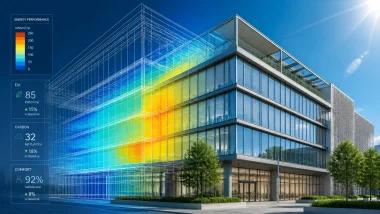
A TM54 operational energy assessment can support BREEAM V7 by providing a structured, project-specific prediction of how the building is likely to perform in operation.
It is particularly useful where the project team needs to understand:
- Realistic occupation and operating schedules
- Energy use associated with equipment and other unregulated loads
- HVAC operating patterns and control strategies
- Base loads and landlord energy use
- Energy use intensity targets
- The potential impact of different design or operational scenarios
The important point is that the model should inform decisions, not simply produce a number for the certification file.
The TM54 model, the statutory compliance model and the BREEAM evidence should be coordinated so that key assumptions are consistent. Differences in floor area, operating hours, occupancy, services or energy boundaries can make the reports difficult to reconcile.
Where whole life carbon assessment fits
Whole life carbon assessment should run alongside energy modelling rather than being treated as a separate exercise at the end of design.
A typical assessment considers lifecycle modules including:
- Product and manufacturing impacts
- Transport and construction
- Operational energy
- Maintenance and replacement
- End-of-life impacts
- Potential benefits beyond the building lifecycle
For BREEAM V7, the assessment should be aligned with the project’s carbon boundaries, material specifications and MEP design. It should also be updated as the design develops.
Early assessment is particularly valuable at RIBA Stage 2, when the team can still compare:
- Structural frames
- Façade systems
- Floor and roof build-ups
- Material quantities
- Services strategies
- Product specifications and Environmental Product Declarations
The UK Net Zero Carbon Building Standard can also provide a useful reference point when setting project targets and checking whether the design is moving towards credible net zero performance.
Practical roadmap by RIBA stage
RIBA Stages 0–1: Preparation and briefing
Establish the sustainability strategy before the design is fixed.
Confirm:
- The required BREEAM scheme and version
- The target rating
- The applicable minimum standards
- Whether Excellent or Outstanding is commercially necessary
- Initial operational energy and carbon targets
- The proposed whole life carbon scope
- The responsibilities of the developer, design team, contractor and assessor
RIBA Stage 2: Concept design
This is the most important stage for testing the strategy.
Commission or plan for:
- Initial operational energy modelling
- Early whole life carbon assessment
- Initial energy and carbon options appraisal
- Preliminary daylighting calculations
- Review of the building form, façade and services concept
- Initial MEP and structural carbon assumptions
Daylighting should be coordinated with the architectural design rather than added after the façade is fixed. Early daylighting calculations can help identify design changes before they become expensive.
RIBA Stage 3: Spatial coordination
At this stage, assumptions should become project-specific.
The team should develop:
- The Ene 01 compliance model
- The Ene 02 operational energy model
- Energy targets and monitoring principles
- A coordinated whole life carbon assessment
- Updated daylighting evidence
- Initial product and equipment information
- A credit responsibility matrix
RIBA Stage 4: Technical design
The focus moves from strategy to evidence.
Typical requirements include:
- Updated energy models reflecting the technical design
- Final or near-final specifications
- Confirmed metering and monitoring arrangements
- Evidence for the operational energy prediction
- Updated embodied carbon calculations, including MEP systems
- Relevant Environmental Product Declarations
- Drawings, schedules and specifications supporting the BREEAM criteria
- Clear records of design changes and their effect on the rating
RIBA Stages 5–6: Construction and handover
The construction team must demonstrate that the certified design has been delivered.
Evidence may include:
- As-built drawings
- Product data and delivery records
- Substitution approvals
- Commissioning records
- Installed equipment information
- Updated energy and carbon calculations
- Photographic evidence
- Handover and operational information
Any major product or services substitution should be reviewed for its impact on BREEAM credits and carbon performance before it is approved.
Post-occupancy reporting
BREEAM V7 places greater emphasis on the transition from predicted to actual performance.
Projects should plan to:
- Retain the original energy and water targets
- Identify who will collect operational data
- Confirm the relevant meters and reporting boundaries
- Record actual consumption once data is available
- Enter the required target and actual figures into the BREEAM platform
This is an important distinction: failure to match the predicted target does not automatically remove Ene 01 or Ene 02 credits. The requirement is focused on measurement and reporting rather than retrospectively recalculating the certification score.
Common pitfalls to avoid
Registering without checking the correct version
As V7.1 is now the default for new registrations, confirm the applicable technical manual before committing to a rating strategy.
Treating statutory compliance as the full energy strategy
A compliance model is necessary, but it does not replace a realistic operational energy assessment where BREEAM V7 criteria require one.
Leaving carbon assessment too late
A whole life carbon assessment completed after the structure and services are fixed may document the design, but it will have limited influence over it.
Failing to align model boundaries
Check that areas, operating hours, energy uses and carbon boundaries are consistent across the BREEAM submission, compliance model, TM54 assessment and whole life carbon report.
Confusing prediction with verification
BREEAM credits are not awarded on the basis of future utility bills. The project still needs robust predicted performance and clear arrangements for reporting actual energy use later.
Chasing credits before checking minimum standards
A project can accumulate credits and still fail to achieve the intended rating if a mandatory requirement has been overlooked. The minimum standards should be reviewed at every design gateway.
Need Help with Your Project?
We always welcome new projects so if you need a dedicated consultant, we are here to help. Contact us today to build a better future.
Get in touch